
Deciding on a kitchen layout is one of the biggest choices you’ll make when designing your home. The classic debate? Open concept versus a traditional closed kitchen.
An open kitchen flows into your living or dining areas, creating a social hub. A closed kitchen is a separate, dedicated room for cooking. Both have their unique charms and practicalities. This guide will walk you through 10 distinct ideas for each style to help you find the perfect fit for your lifestyle and home.
Open Kitchen Ideas
1. The Entertainer’s Dream with a Large Island
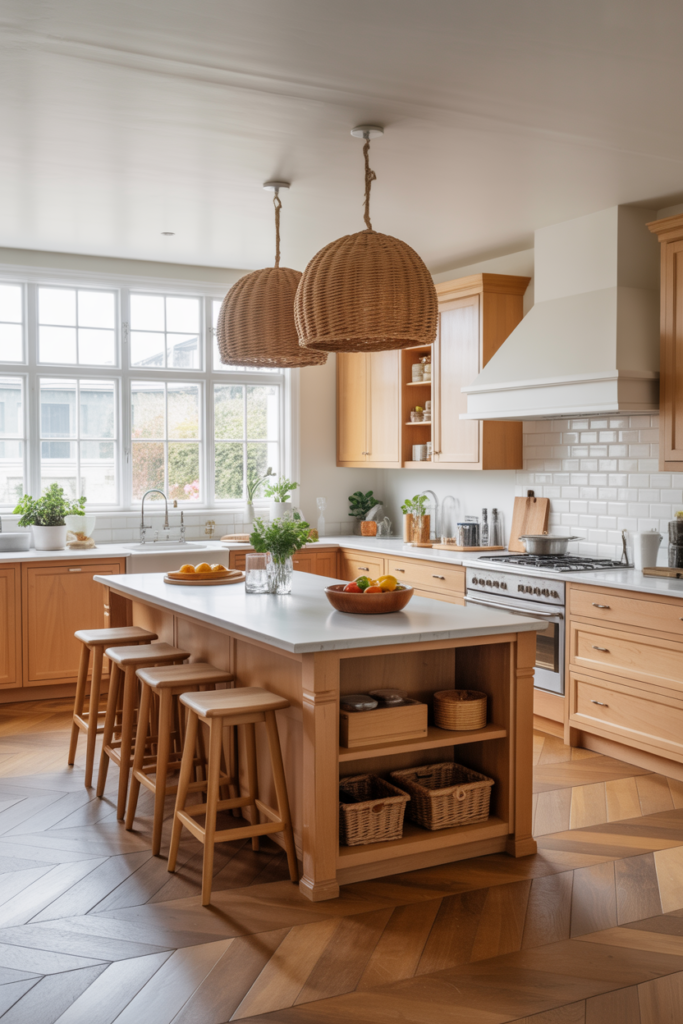
Imagine hosting a dinner party where you can chop vegetables and still chat with your guests. A large, central island makes this possible, serving as the heart of your home. It’s a perfect spot for friends to gather with a glass of wine or for kids to do homework while you prepare meals.
To make it truly functional, equip the island with a prep sink, extra storage, or even a wine fridge. Stools along one side create a casual dining spot, making your kitchen the ultimate multi-purpose space for everyday life and special occasions.
2. The Broken-Plan Layout with a Half-Wall
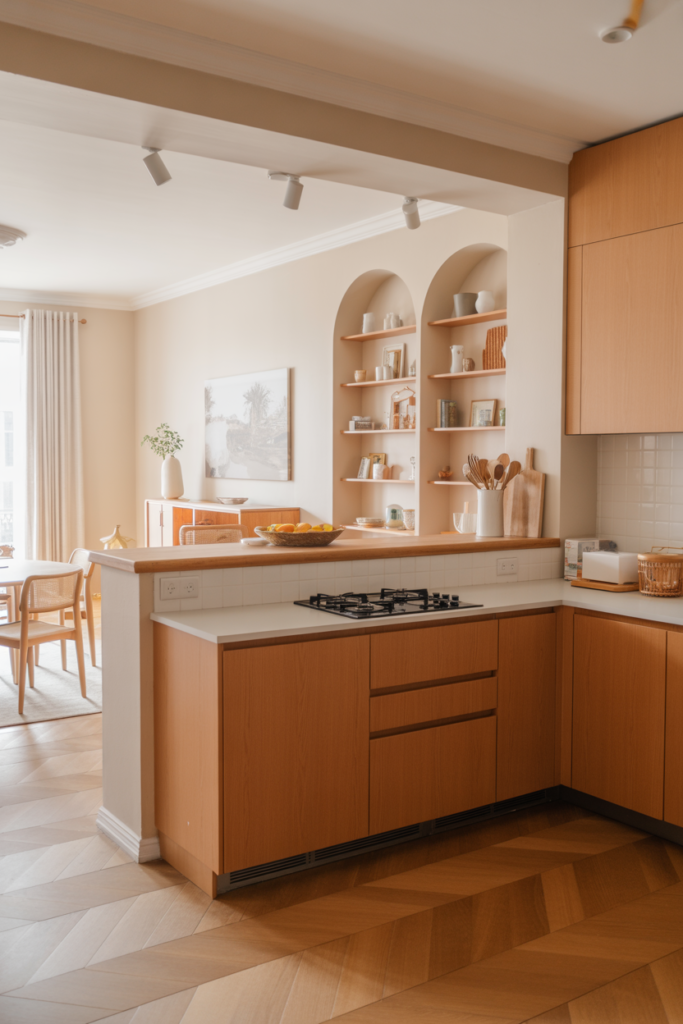
If you want the feel of an open space without giving up all sense of separation, a broken-plan design is an excellent compromise. A half-wall between the kitchen and living area can define the space while still allowing light and conversation to flow freely.
This design offers a surface for placing decorative items or can house extra outlets. It maintains a visual connection to the rest of the home, so you don’t feel isolated while cooking, but it also helps contain some of the kitchen clutter from view.
3. Glass Partitions for an Airy Feel
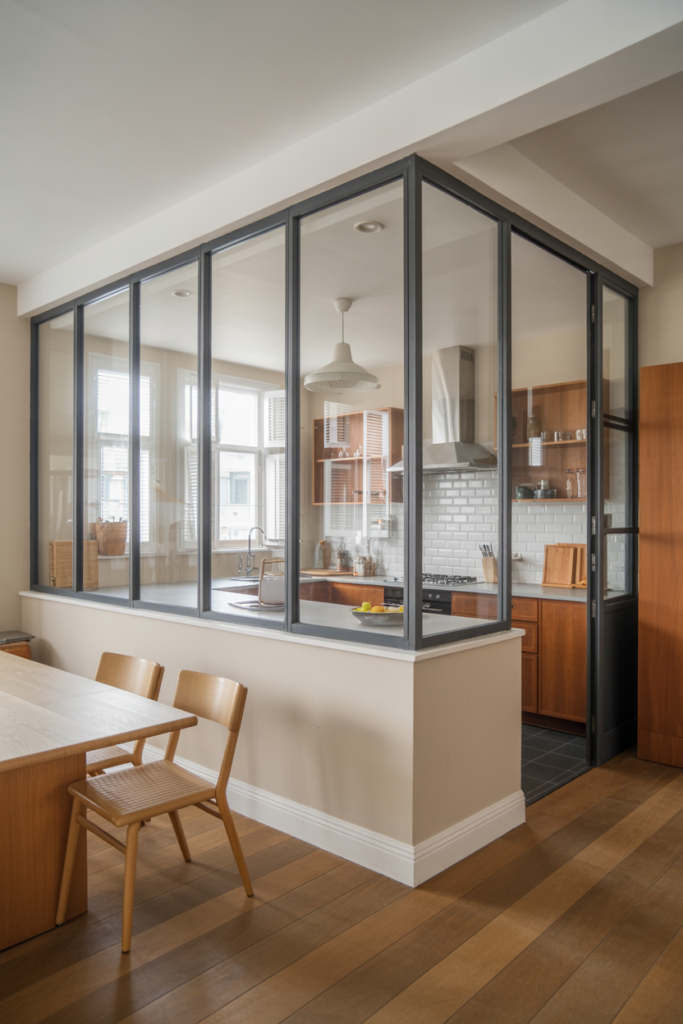
Want to keep cooking smells and sounds contained without losing the open-concept feel? Stylish glass partitions are your answer. These elegant dividers, often framed in steel for a modern industrial look, separate the kitchen from the living area physically but not visually.
This approach keeps your home feeling bright and spacious. You get the practical benefits of a closed kitchen—like reduced noise—while maintaining the expansive, connected atmosphere that makes open layouts so popular.
4. Seamless Flow with Continuous Flooring
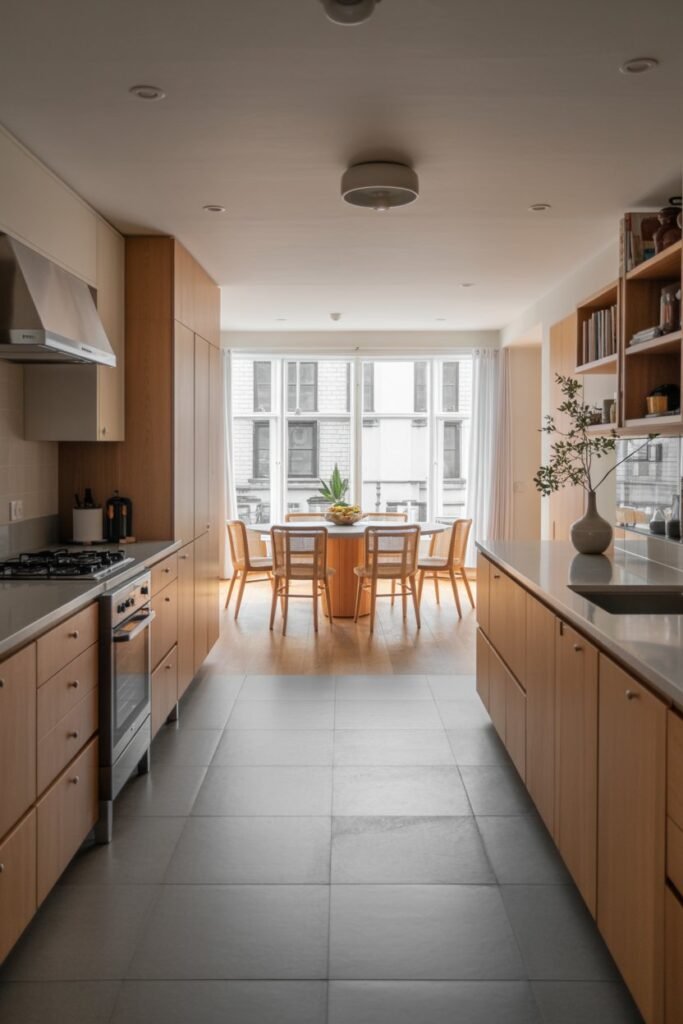
Create a powerful sense of unity in your open-plan space by using the same flooring throughout the kitchen, dining, and living areas. Whether you choose hardwood, tile, or polished concrete, a continuous floor creates a seamless transition between zones.
This simple design choice makes the entire area feel larger and more cohesive. It visually ties the different functional spaces together, reinforcing the feeling of one large, integrated living environment perfect for modern family life.
5. The Dining Table as a Connector
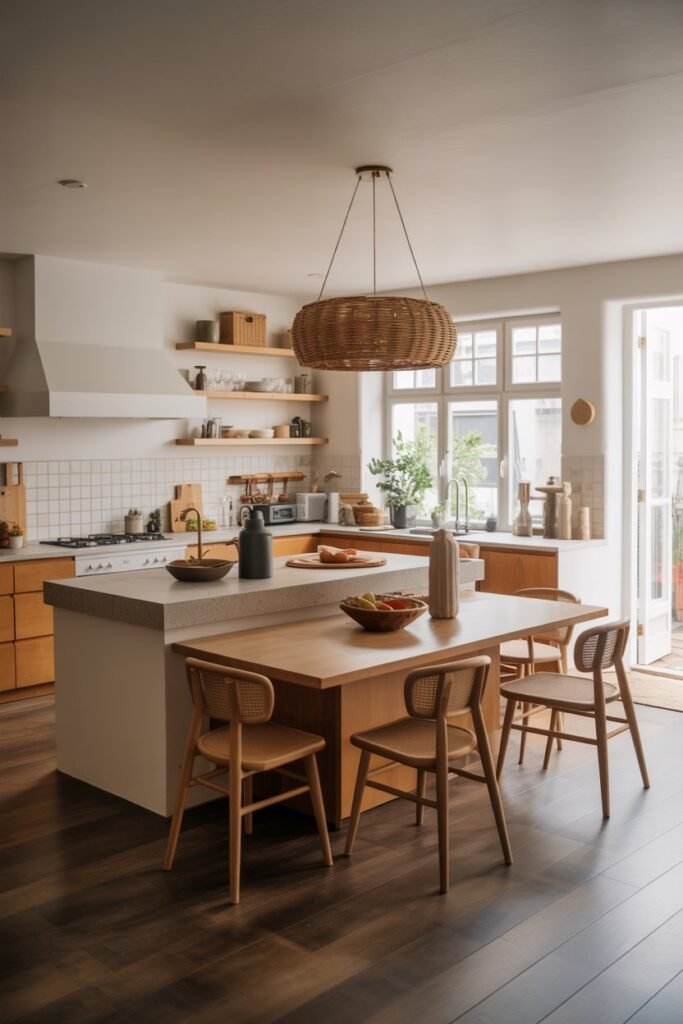
Instead of a kitchen island, use a large dining table to bridge the gap between your kitchen and living space. This setup fosters a cozy, communal atmosphere where family and guests can comfortably sit for a meal right in the heart of the action.
This works especially well in slightly smaller open-plan homes where an island might feel too bulky. It merges the functions of cooking, dining, and socializing into one welcoming area, making your kitchen feel like a warm, inviting cafe.
6. The L-Shaped Layout with a Peninsula
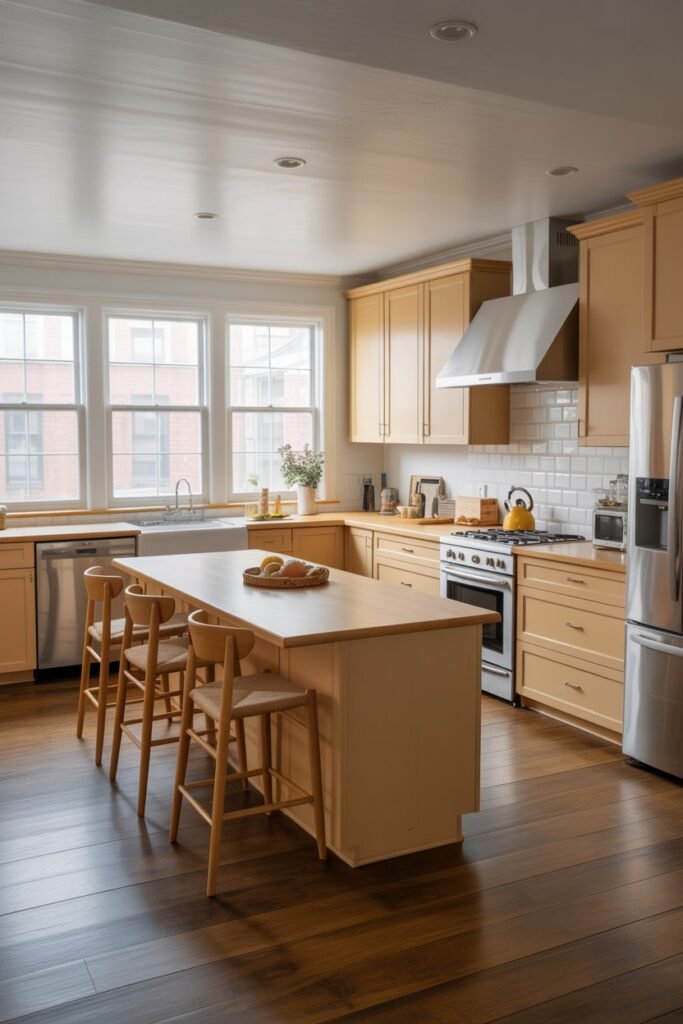
An L-shaped kitchen with a peninsula is a classic and effective way to define an open-concept space. The peninsula acts as a partial wall, creating a boundary for the kitchen while also providing extra counter space and seating.
This layout is perfect for maintaining the “work triangle” of the sink, stove, and refrigerator, making the kitchen highly efficient. The peninsula becomes a natural spot for breakfast, casual meals, or a buffet line when you’re entertaining.
7. Raise the Floor for Zone Definition
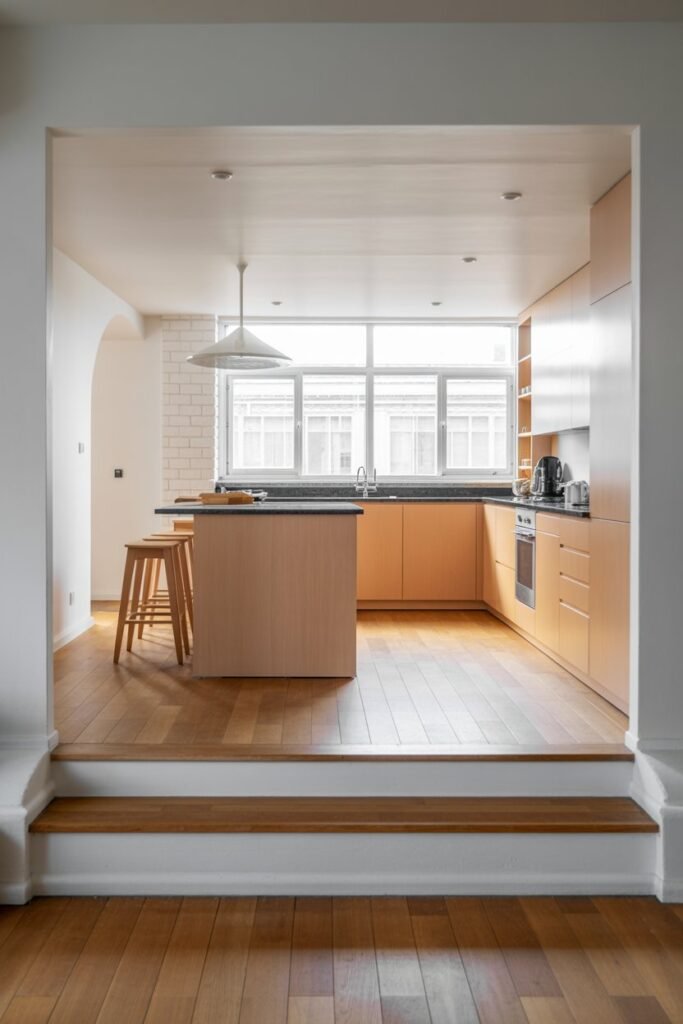
Subtly define your kitchen area by elevating it slightly above the main living space. A single step up to the kitchen platform can create a psychological boundary without closing off the area entirely. This is a creative architectural trick to add dimension and interest.
This technique helps to visually separate the cooking zone while keeping the sightlines open. It adds a custom, high-design feel to your home and makes the kitchen feel like a distinct, purposeful stage for all your culinary activities.
8. Use Ceiling Treatments to Define Space
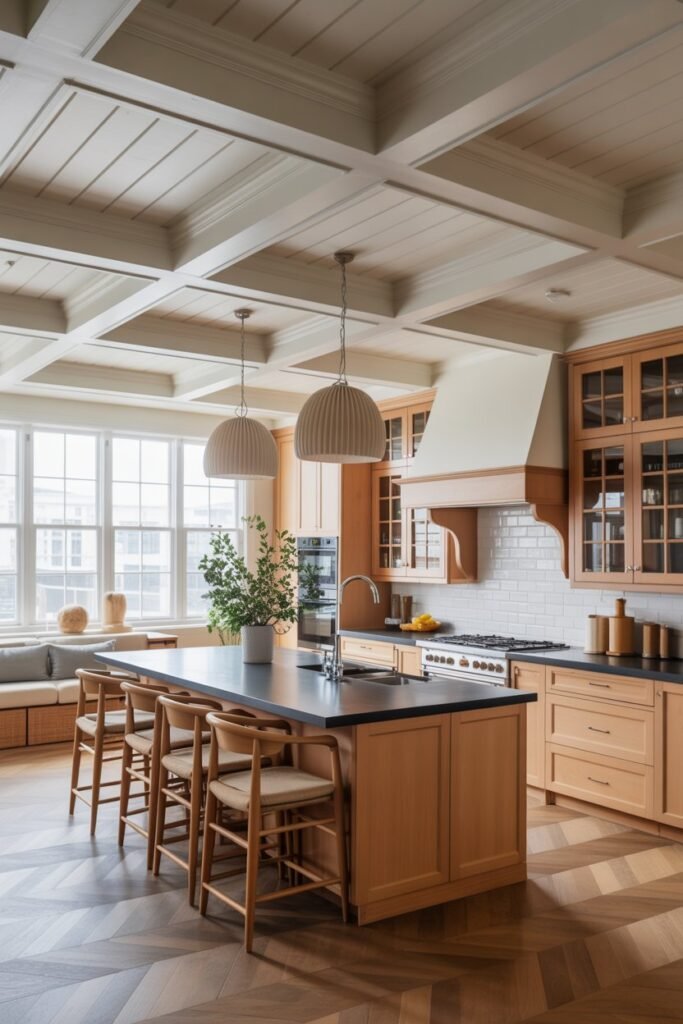
Define your open kitchen from above. Using a different ceiling treatment, like a dropped ceiling, exposed beams, or a coffered design, can visually mark the kitchen area. This technique adds architectural character while maintaining an open floor plan.
Pairing this with statement pendant lights over an island or peninsula further anchors the kitchen zone. It’s a sophisticated way to create separation without building any walls, adding depth and style to your home.
9. Consistent Cabinetry into the Living Area
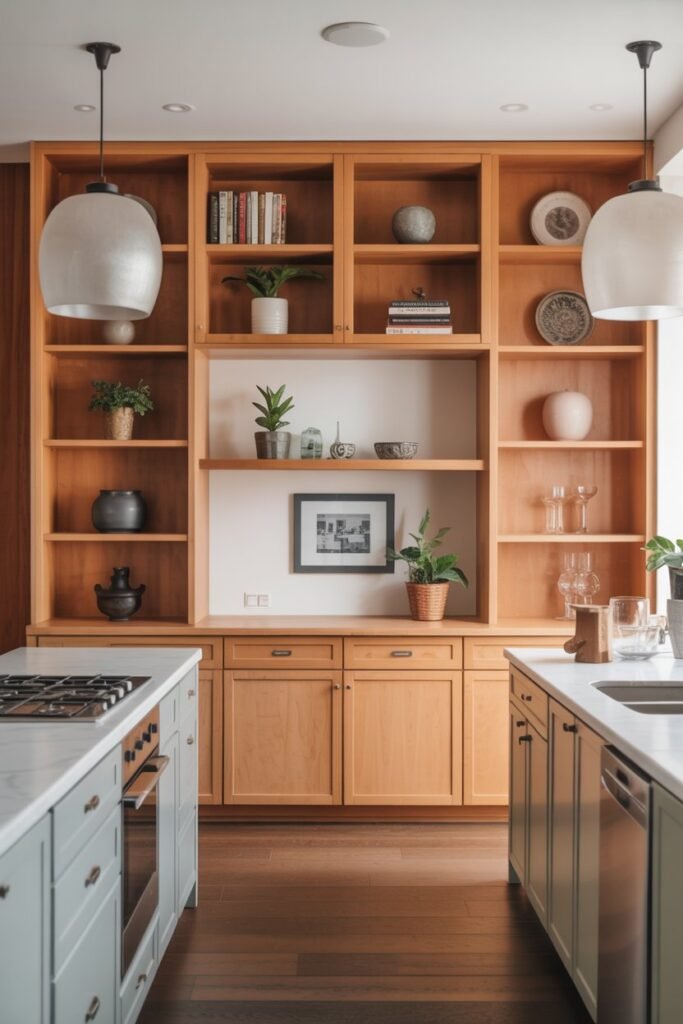
Extend your kitchen’s style into the living or dining area by using matching cabinetry. You can build a media center, a dry bar, or bookshelves using the same cabinet style and color as your kitchen. This creates a beautifully cohesive and custom look.
This design strategy makes the entire open-concept space feel intentional and harmonious. It proves that your kitchen isn’t just a functional afterthought but an integral part of your home’s overall design aesthetic, flowing smoothly into the social areas.
10. The Single-Wall Kitchen for Maximum Openness
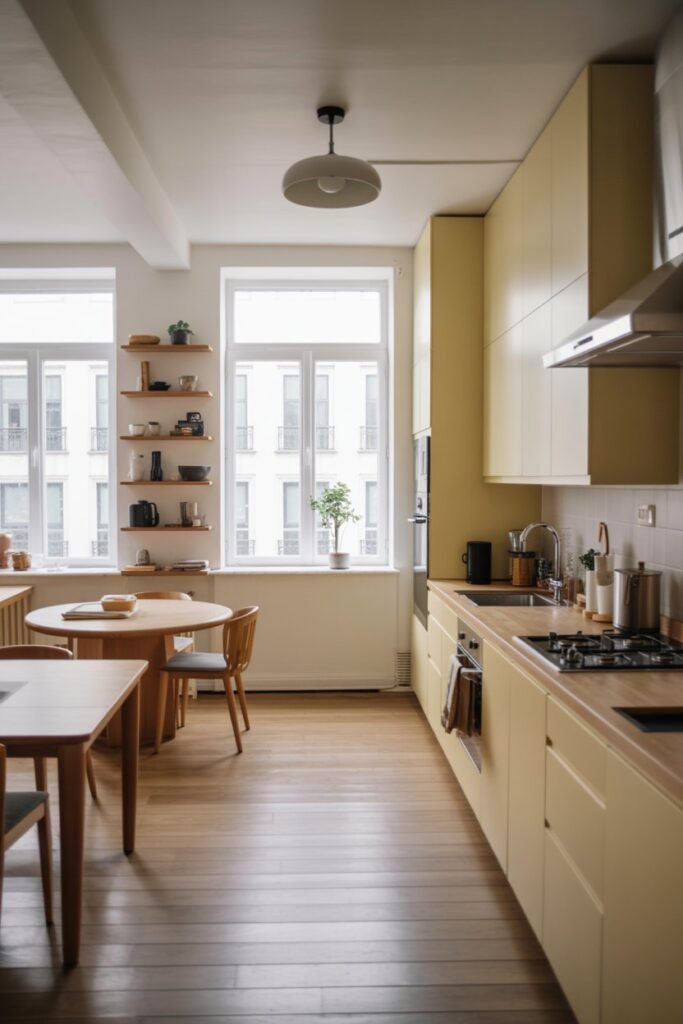
Perfect for lofts, apartments, or smaller homes, the single-wall kitchen maximizes open space. All appliances, counters, and cabinets are aligned along one wall, leaving the rest of the room completely open for dining and living.
This minimalist layout is incredibly efficient and space-saving. To make it work, use vertical space with tall cabinets and integrate appliances for a sleek look. The result is a light, airy environment that feels much larger than it is.
Closed Kitchen Ideas
11. The Classic U-Shaped Chef’s Kitchen
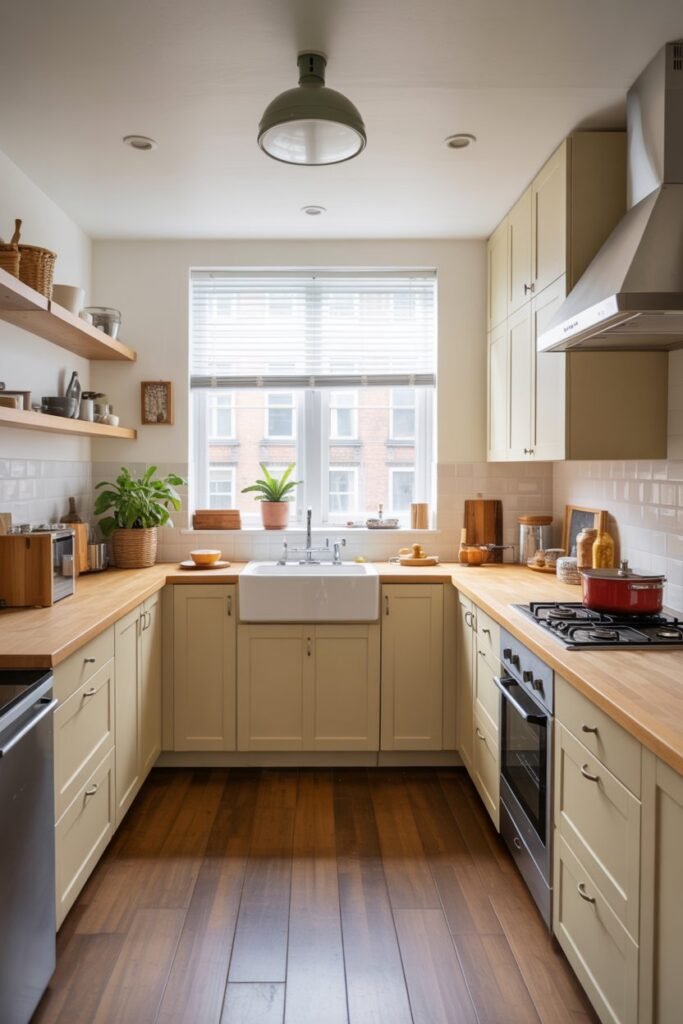
A U-shaped layout is a dream for the serious home cook. With counters and appliances on three sides, everything is within easy reach, creating an incredibly efficient and contained workspace. This design maximizes storage and counter space.
In a closed kitchen, this layout ensures that you have a dedicated zone for cooking without any foot traffic from other family members passing through. You can focus entirely on your culinary creations in a space designed for pure function.
12. Pocket Doors for Flexible Privacy
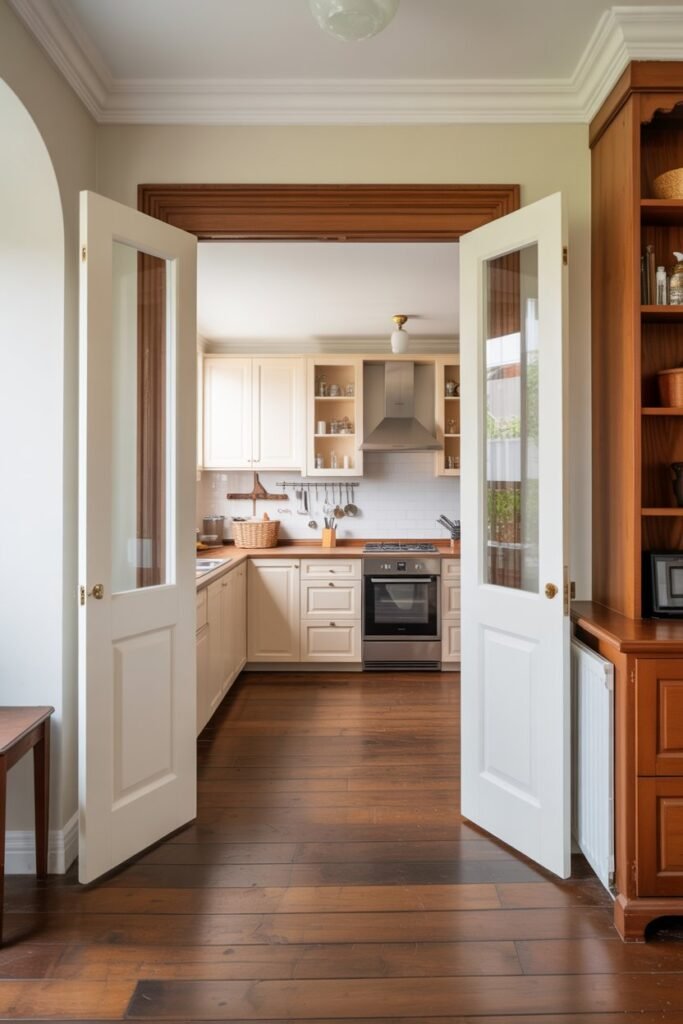
Enjoy the best of both worlds with pocket doors. When you want the kitchen to be open and social, simply slide the doors into the walls. When you need to hide the mess or want some privacy, slide them shut.
This is a brilliant solution for those who are torn between open and closed concepts. It offers complete flexibility, allowing you to adapt your space to the occasion, whether it’s a quiet family dinner or a large, bustling party.
13. The Galley Kitchen with a Window Wall
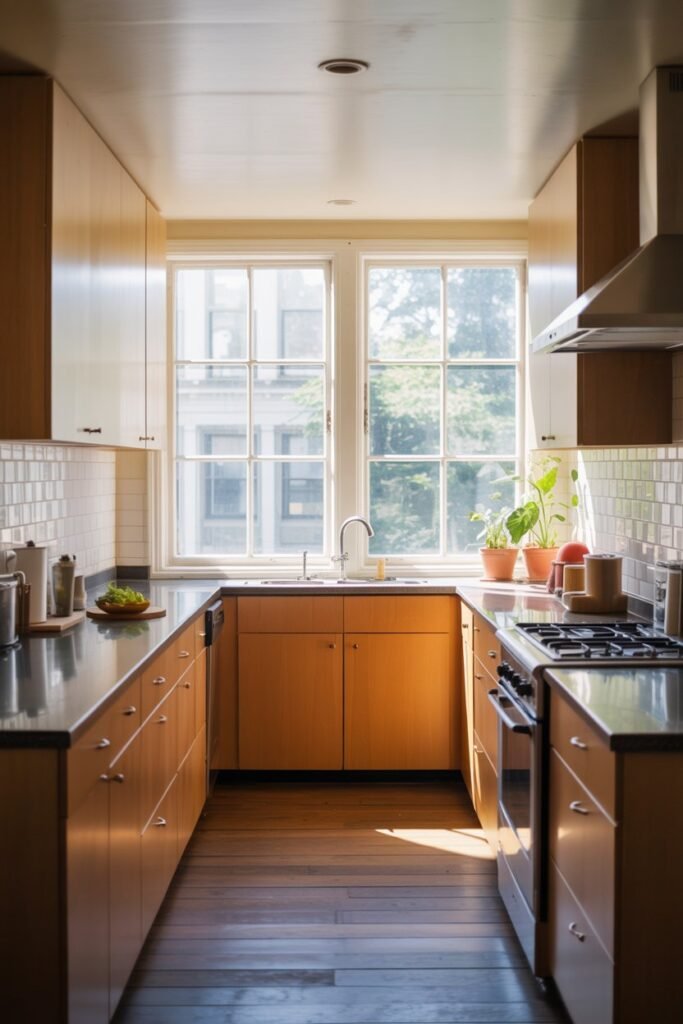
A galley kitchen, which features two parallel walls of counters, can feel open and airy when one wall is dominated by large windows. The abundance of natural light prevents the space from feeling cramped and offers beautiful views while you work.
This layout is extremely efficient, minimizing the steps between key work areas. The window wall not only brightens the room but also connects you to the outdoors, making your closed kitchen feel refreshing and spacious.
14. A Cozy Eat-In Breakfast Nook
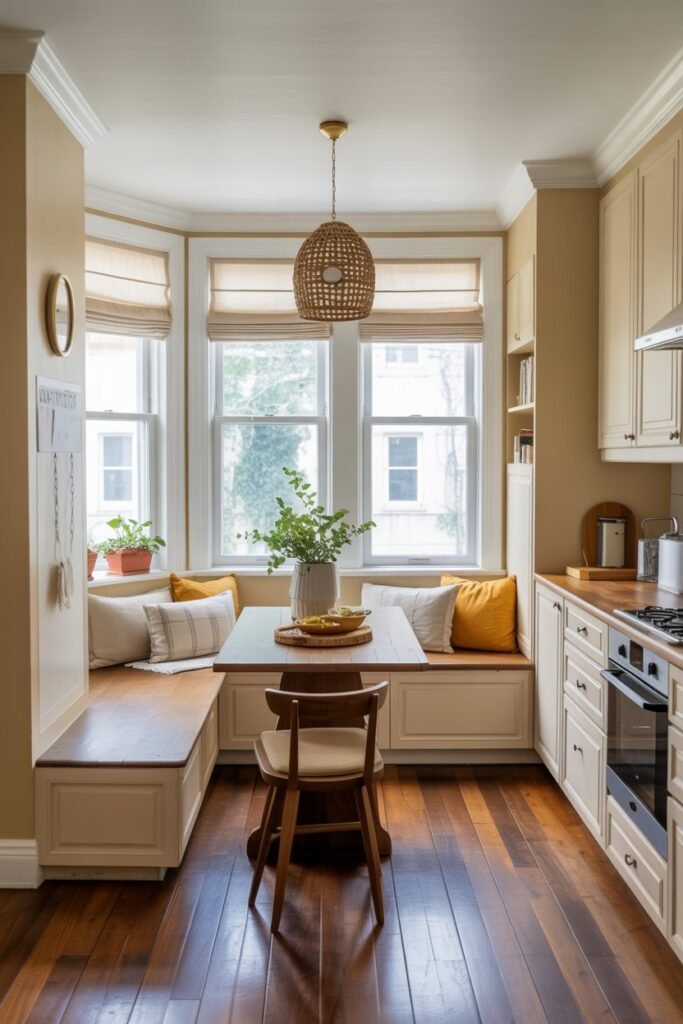
A closed kitchen doesn’t have to be purely functional. Incorporate a charming breakfast nook with a built-in bench and a small table. This creates a cozy spot for morning coffee, casual meals, or a place for kids to hang out while you cook.
This feature adds warmth and personality to a closed kitchen, making it a comfortable and inviting room in its own right. It provides a dedicated dining space within the kitchen, separate from a more formal dining room.
15. The Bold Statement with Dramatic Color
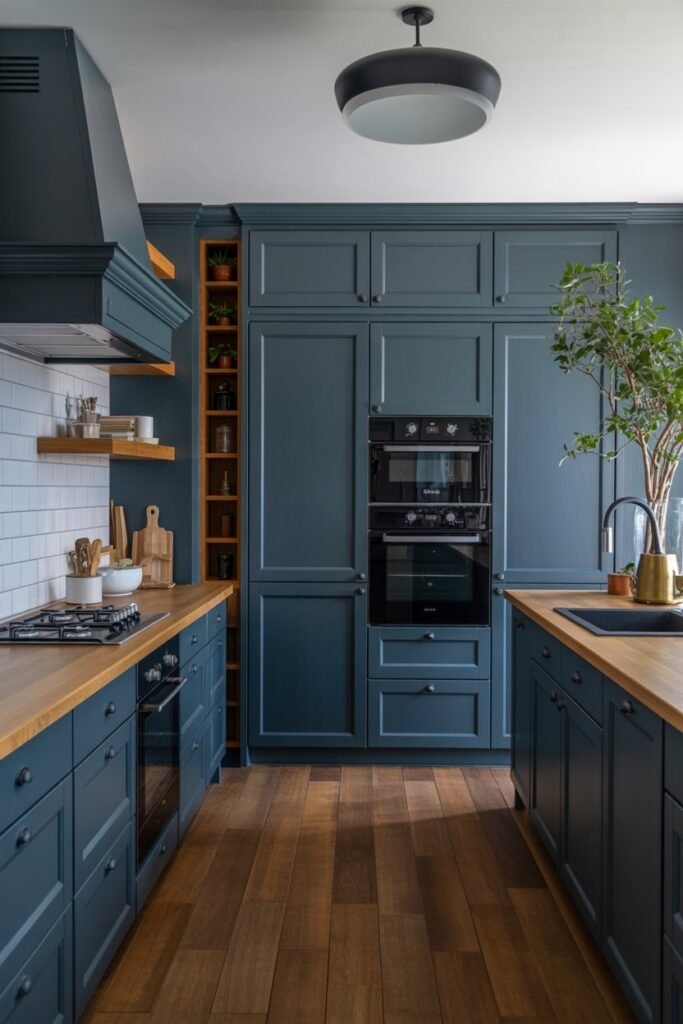
Since a closed kitchen is its own distinct room, you have the freedom to be bold with your design choices. Paint the cabinets in a deep, dramatic color like navy blue, forest green, or even black. This can create a sophisticated and moody atmosphere.
A closed kitchen allows you to experiment with colors and styles that might overwhelm an open-plan space. It’s your chance to create a room with a strong personality that stands apart from the rest of your home.
16. The Butler’s Pantry Connection
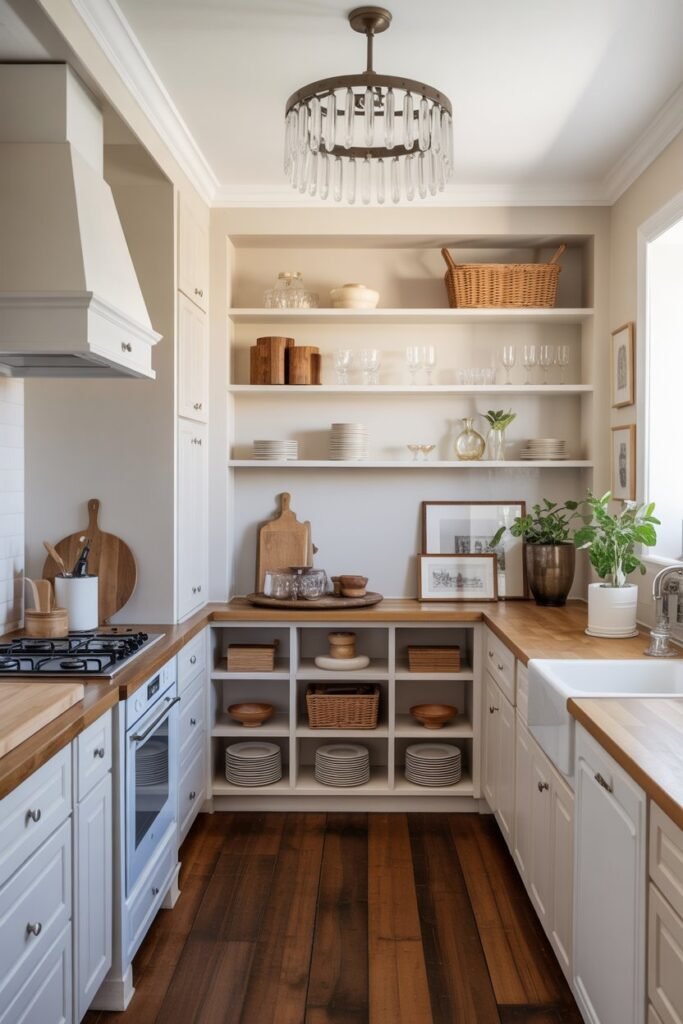
For a touch of classic luxury, connect your closed kitchen to the dining room with a butler’s pantry. This small transitional space is perfect for storing your fine china, glassware, and serving dishes, and it provides an extra staging area for plating food.
A butler’s pantry adds an element of formality and organization, keeping the main kitchen clutter-free during dinner parties. It’s a functional and elegant feature that enhances the experience of entertaining at home.
17. The Interior Window or Pass-Through
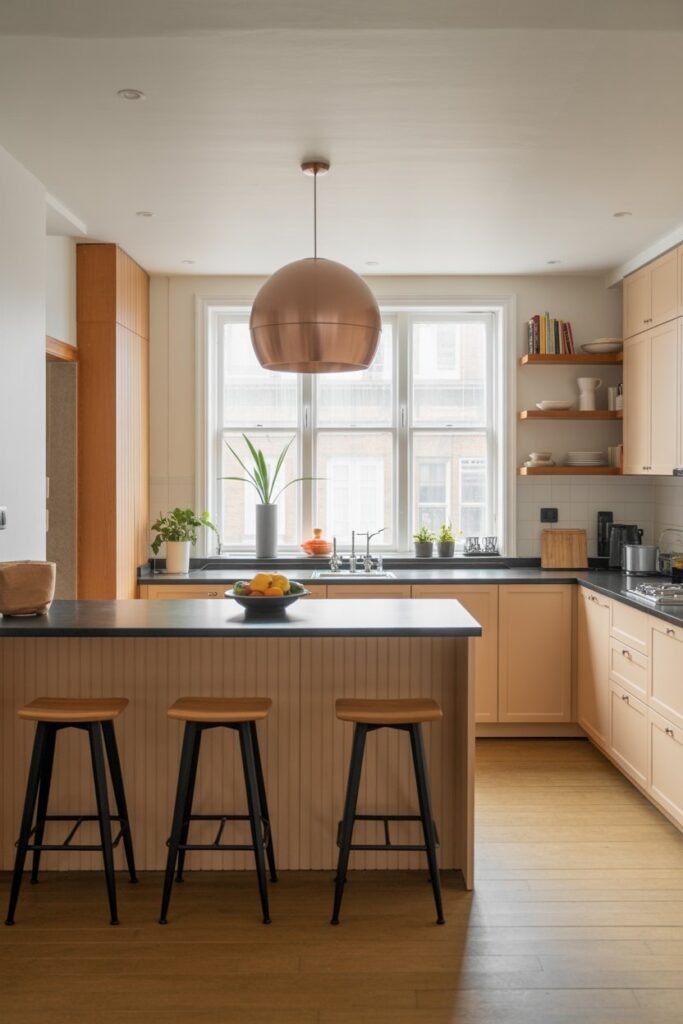
Create a connection to the rest of the house without fully opening up the kitchen by adding an interior window or a pass-through. This allows you to pass dishes to the dining area easily and engage in conversation, while still keeping the kitchen largely separate.
A pass-through can also be designed with a breakfast bar and stools on the other side, offering a casual spot for interaction. It’s a smart compromise that offers some of the social benefits of an open kitchen with the practical advantages of a closed one.
18. Glass French Doors for an Elegant Entrance
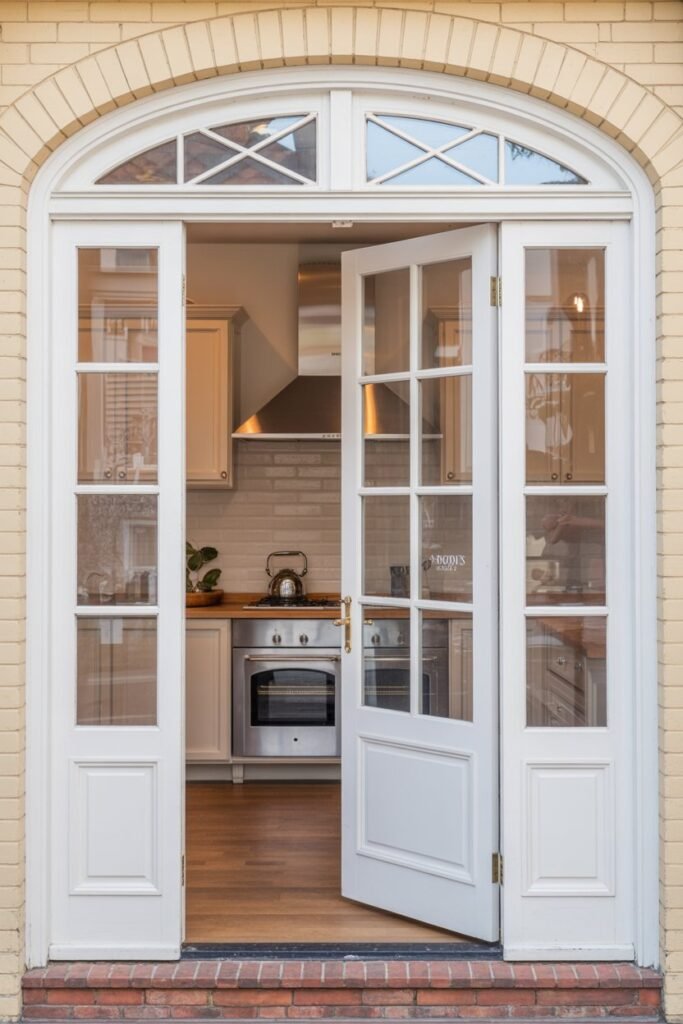
Make the entrance to your closed kitchen a design statement with beautiful French doors. Glass panels allow light to travel between the kitchen and adjacent rooms, which helps the kitchen feel connected and bright even when the doors are closed.
This option adds a touch of classic elegance and architectural detail to your home. It provides the option for privacy and noise control while maintaining a visual link that prevents the kitchen from feeling completely isolated.
19. The Specialized Workstation Layout
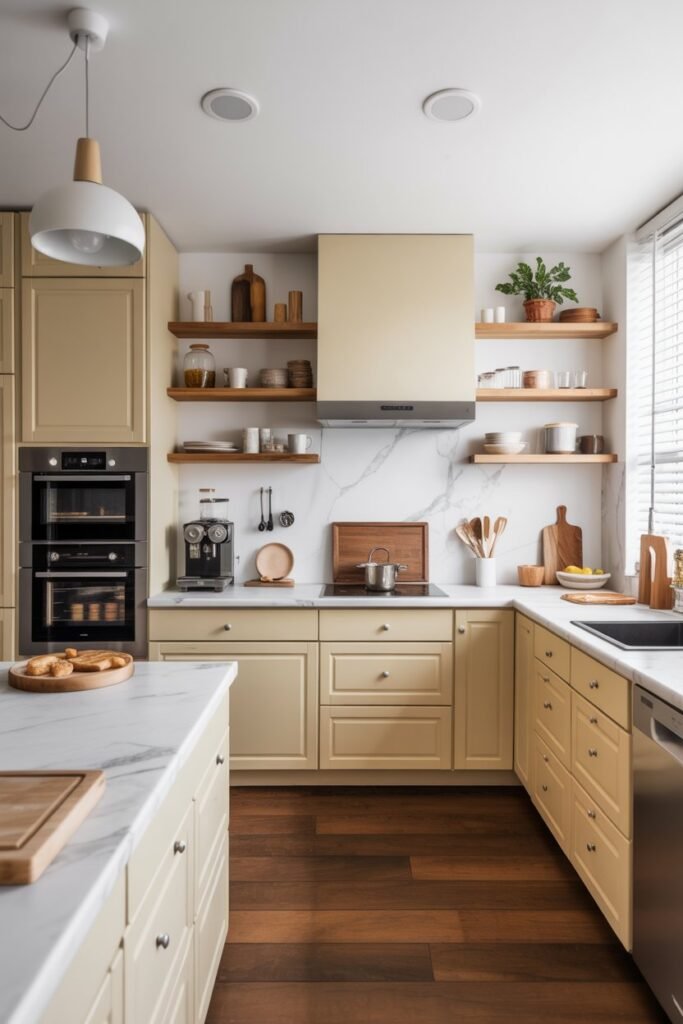
A closed kitchen is the perfect canvas for creating specialized workstations. You can designate specific areas for different tasks, such as a baking station with a marble countertop, a coffee bar with an espresso machine, or a dedicated food prep zone.
This level of organization is ideal for passionate cooks who spend a lot of time in the kitchen. It allows for a highly logical and efficient workflow, where every tool and ingredient has its designated place, free from the distractions of an open living area.
20. The Hidden Kitchen Behind Cabinetry
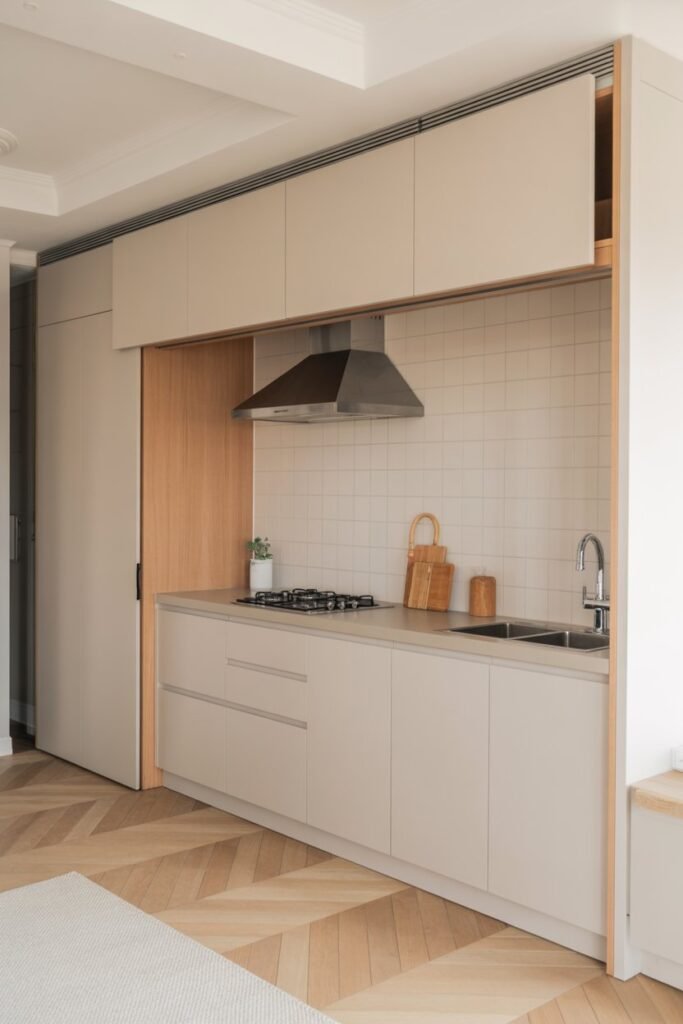
For the ultimate minimalist and clean look, design a closed kitchen that can be completely hidden behind large cabinet doors or a moving wall. When not in use, the entire kitchen—including counters, sinks, and appliances—disappears from view.
This “invisible” kitchen is perfect for multi-functional spaces or for homeowners who prioritize a sleek, uncluttered aesthetic. It offers the full functionality of a closed kitchen but allows you to instantly transform the area into a calm, non-kitchen space.
Conclusion
Whether you crave the social energy of an open-concept space or the focused privacy of a closed kitchen, the right design is out there.
Think about how you live, cook, and entertain to find the layout that truly works for you.
By exploring these ideas, you can create a kitchen that is not only beautiful but also perfectly tailored to your lifestyle.

I’m Jasmin Otto — a foody girl who truly loves food. I’m passionate about cooking, exploring new flavors, and sharing healthy yet delicious recipes here on foodieeshe.com. I also love beautiful kitchens and enjoy sharing décor ideas that make cooking spaces warm, stylish, and inspiring.