
Galley kitchens can feel a bit tricky to design. They are long, narrow spaces, and it’s easy for them to feel cramped. But I’ve learned that with the right ideas, a galley kitchen can be incredibly efficient and stylish.
It’s all about making smart choices to maximize every inch of space.
In this list, I’m going to share 20 ideas that can transform your galley kitchen.
From clever storage solutions to design tricks that create an illusion of space, these tips will help you create a kitchen that is not only functional but also a place you’ll love to be in.
1. Embrace Light and Bright Colors

When I first started designing my galley kitchen, the best advice I got was to use light colors. It made a huge difference.
White, cream, light gray, or soft pastels on the walls and cabinets can make the narrow space feel much larger and more open. These colors reflect light, which helps to brighten up the kitchen and make it feel less like a tunnel.
I painted my cabinets a soft white, and it instantly made the room feel airier. Dark colors, on the other hand, can absorb light and make the space feel even smaller.
2. Install Smart Cabinetry
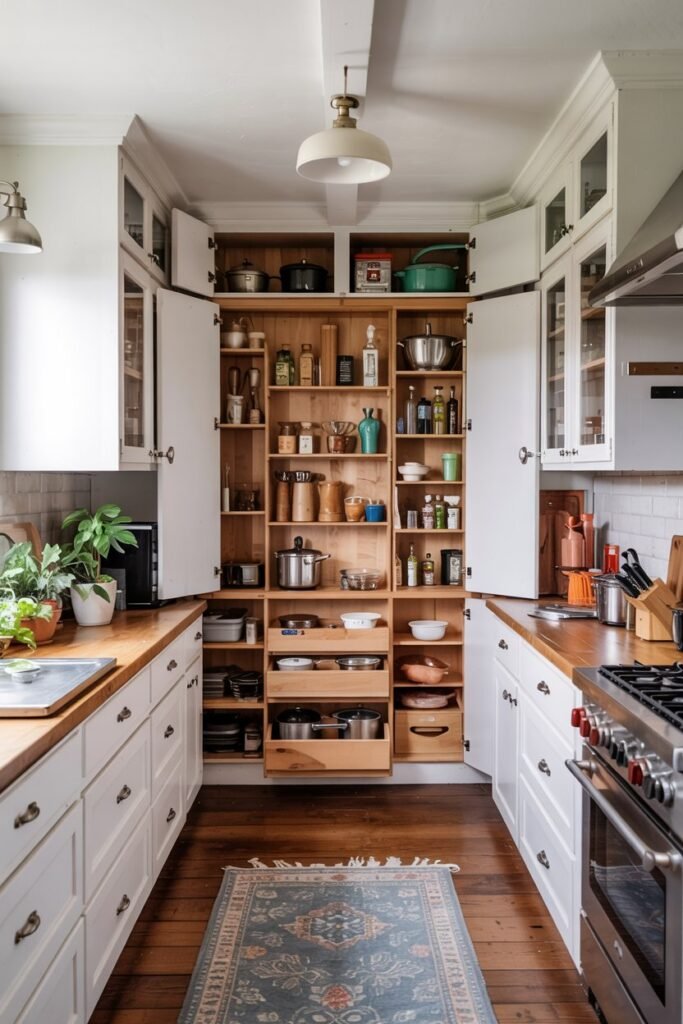
Storage is always a challenge in a galley kitchen, but I found that smart cabinetry is a game-changer. Instead of standard shelves, I opted for pull-out pantry units and deep drawers for my pots and pans.
These solutions let me use the full depth of my cabinets without having to dig around for things in the back. I also installed vertical dividers for my baking sheets and cutting boards, which keeps them organized and easy to grab.
Using the full height of the wall with floor-to-ceiling cabinets is another great way to add storage without taking up more floor space.
3. Use Reflective Surfaces
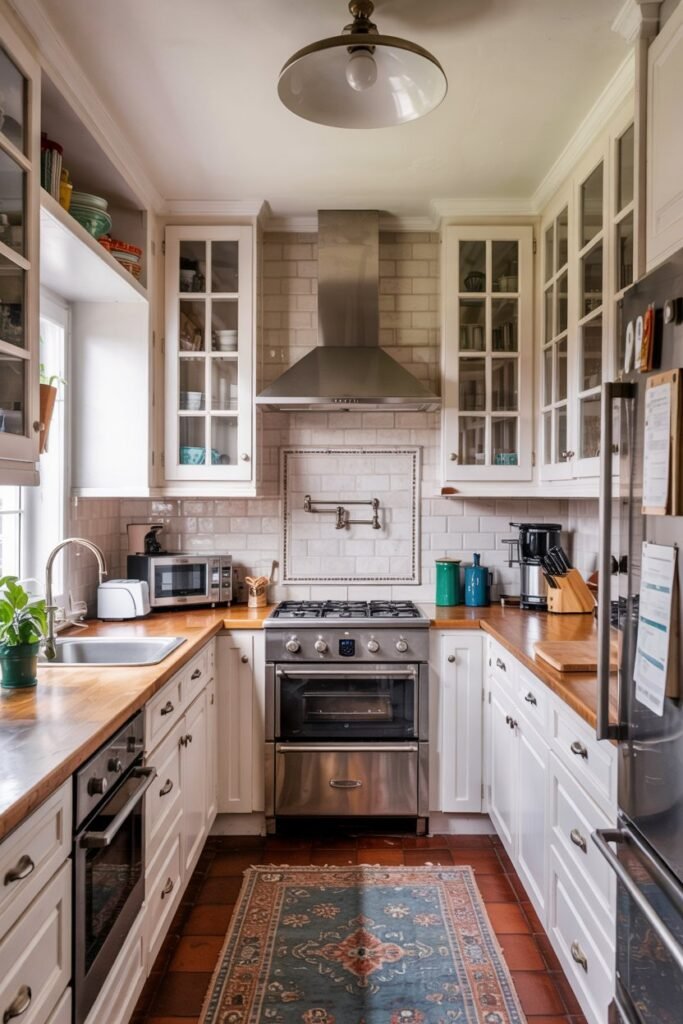
I used reflective surfaces to trick the eye and make my galley kitchen feel wider. A mirrored or high-gloss backsplash is a fantastic way to do this.
It bounces light around the room and creates a sense of depth. I chose a glossy white subway tile for my backsplash, and it works wonders. You could also consider cabinet doors with glass inserts or high-gloss finishes.
Even stainless steel appliances contribute to this effect by reflecting light and adding a sleek, modern touch to the space. It’s a simple trick with a big impact.
4. Opt for Open Shelving
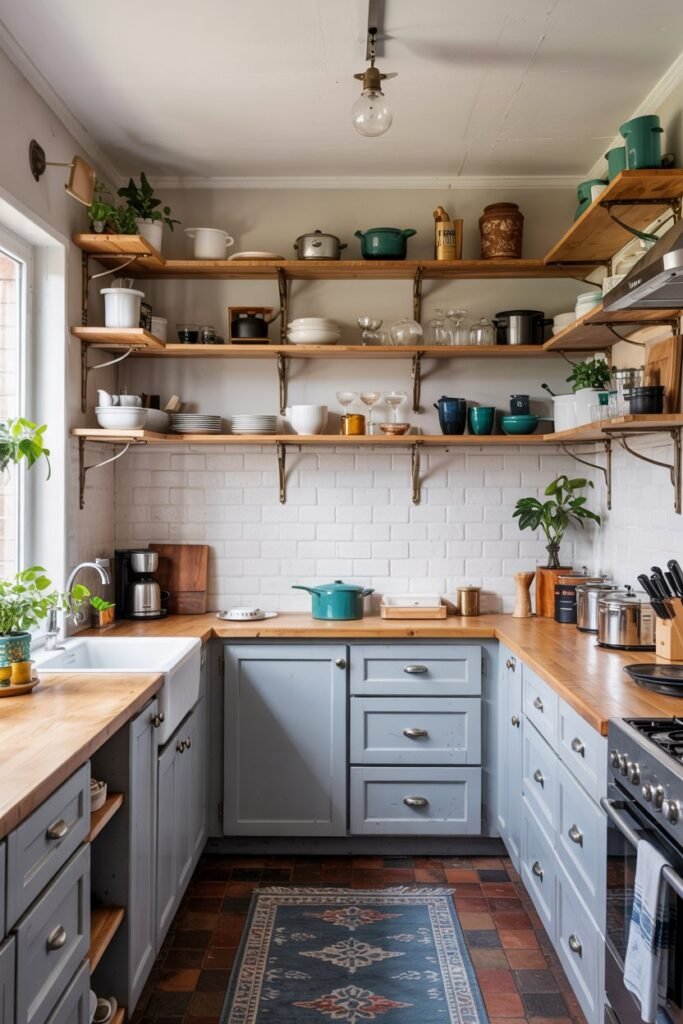
To break up the solid blocks of cabinetry, I decided to install some open shelving. It was a great move.
Open shelves make the kitchen feel less boxed-in and provide a great spot to display nice dishes, glassware, or even some small plants. I put them on one side of my kitchen to keep things from feeling too cluttered.
It forced me to be tidy, but the visual reward is worth it. It’s a perfect way to add a bit of personality and style to the functional space.
5. Lay a Runner Rug
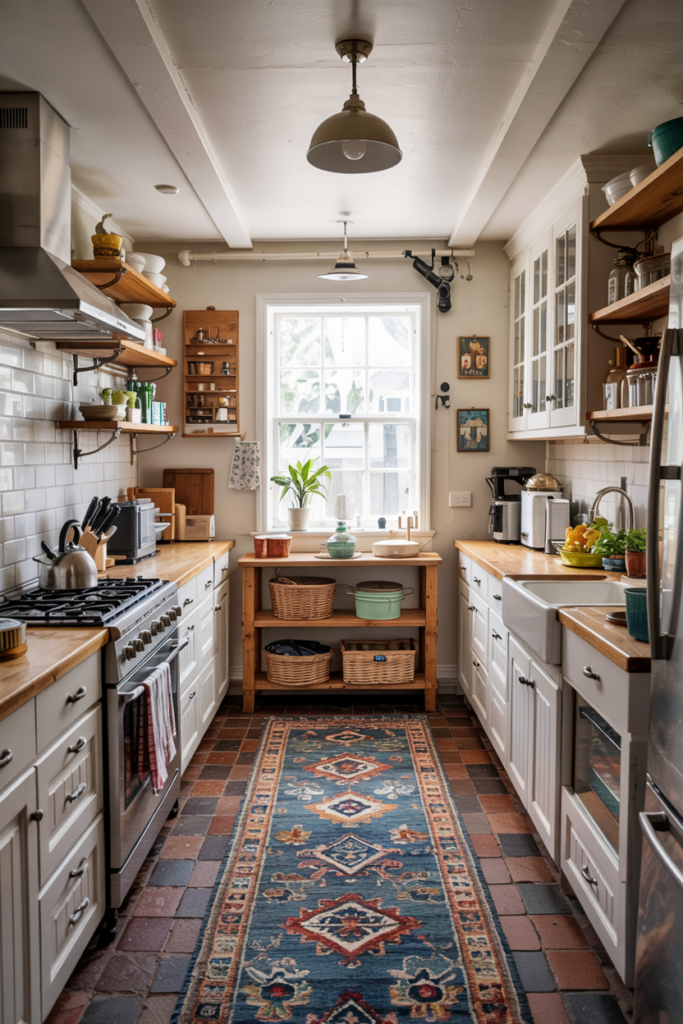
A runner rug might seem like a small detail, but it can completely change the feel of a galley kitchen. I added a long, colorful runner down the center of my kitchen floor.
It draws the eye down the length of the room, creating a sense of direction and flow. It also adds a pop of color and texture, making the space feel cozier and more inviting.
Plus, it’s much more comfortable to stand on than a hard floor when I’m cooking for a long time. Just make sure to get one with a non-slip backing for safety.
6. Maximize Natural Light
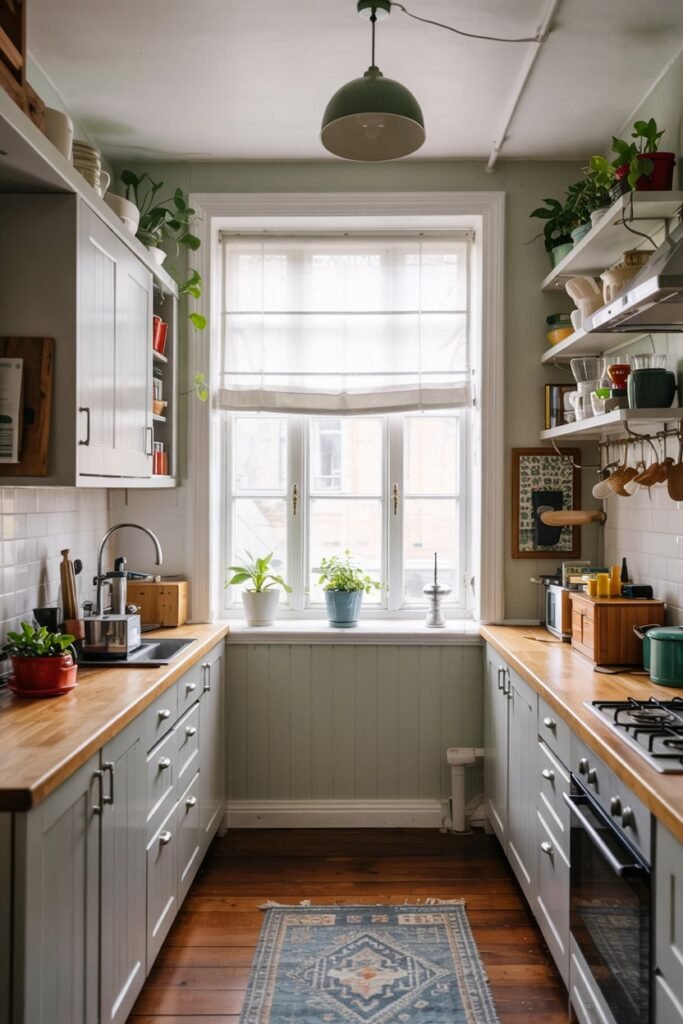
I knew I had to make the most of any windows in my galley kitchen. I kept the window treatments minimal to let in as much natural light as possible.
I chose a simple, translucent roller blind that provides privacy without blocking the light. If you have a window at the end of your kitchen, it can become a beautiful focal point.
Keeping the windowsill clear or decorating it with just a few small plants can draw attention to the light and the view outside, making the whole kitchen feel brighter and more connected to the outdoors.
7. Install Under-Cabinet Lighting
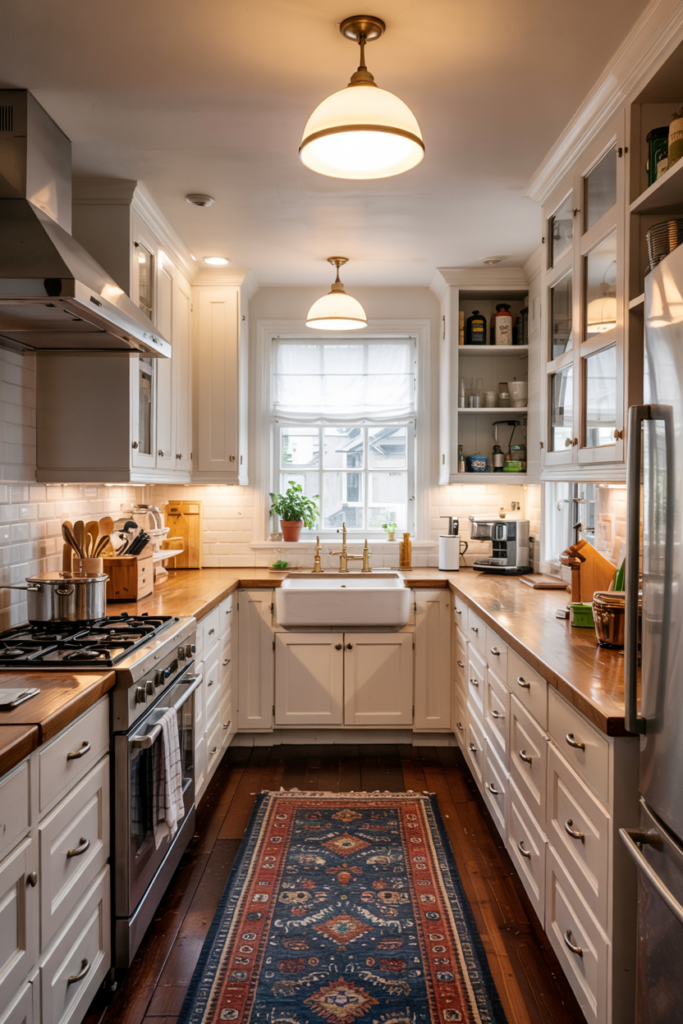
Good lighting is absolutely essential in a galley kitchen. One of the best decisions I made was installing under-cabinet lighting.
It illuminates the countertops, which is where I do all my prep work. This task lighting makes cooking safer and more enjoyable, and it also adds a lovely ambient glow to the kitchen.
I used LED strips, which are energy-efficient and easy to install. It’s a practical upgrade that also adds a layer of sophistication and makes the kitchen feel more high-end.
8. Choose Streamlined Hardware
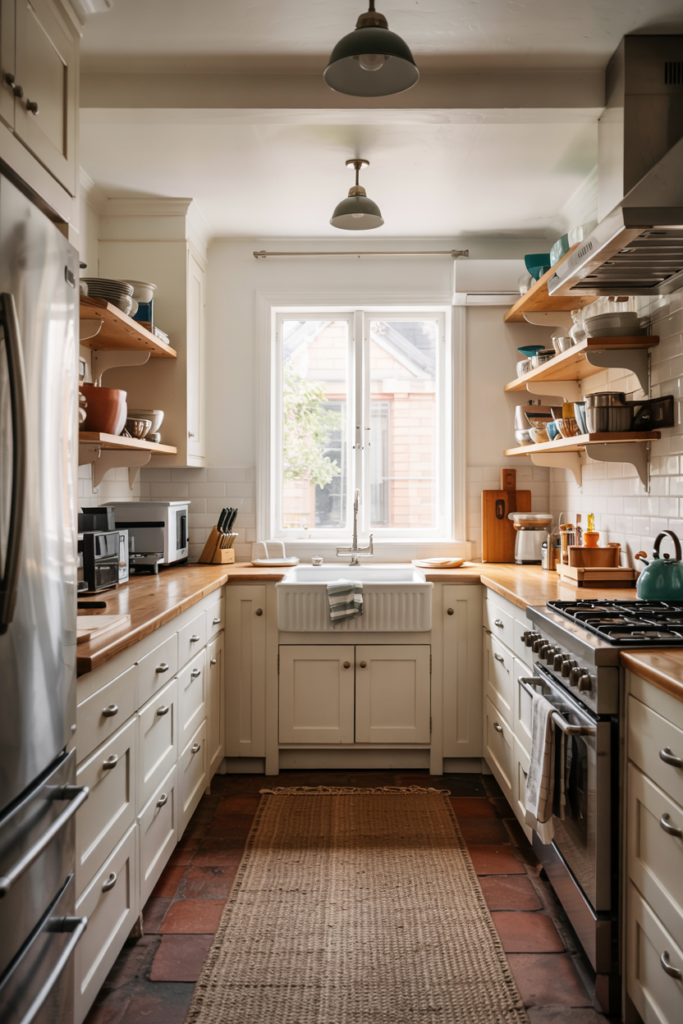
In a narrow space like a galley kitchen, bulky hardware on cabinets and drawers can snag on clothing and make the area feel cluttered.
I chose sleek, simple hardware to avoid this problem. I went with slim bar pulls that are modern and unobtrusive. You could also opt for recessed pulls or even handleless cabinets for a completely seamless look.
This small change contributes to a clean, uncluttered aesthetic and improves the flow of traffic through the narrow corridor. It’s about keeping things smooth and efficient.
9. Create a Focal Point
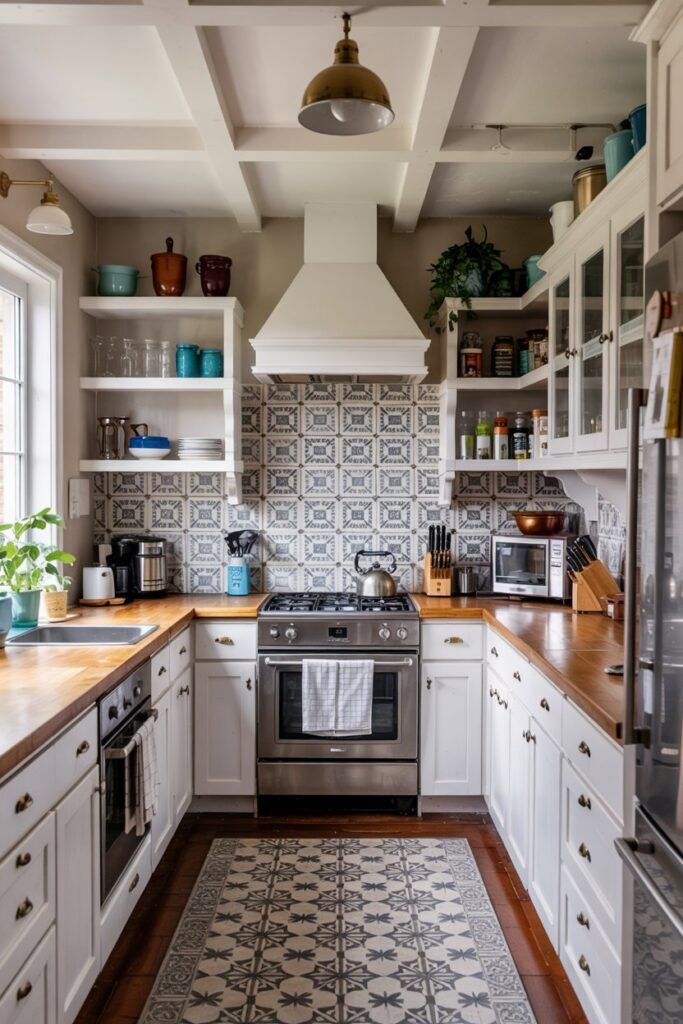
Even a small galley kitchen can benefit from a focal point. I decided to make the backsplash behind my stove the star of the show.
I used a beautiful patterned tile in that one area, while keeping the rest of the backsplash simple. This draws the eye and adds a “wow” factor without overwhelming the space.
Another idea is to use a bold color on the cabinets at the very end of the kitchen or to hang a single, striking piece of art. A focal point gives the room a sense of purpose and design intentionality.
10. Consider a Single-Wall Layout
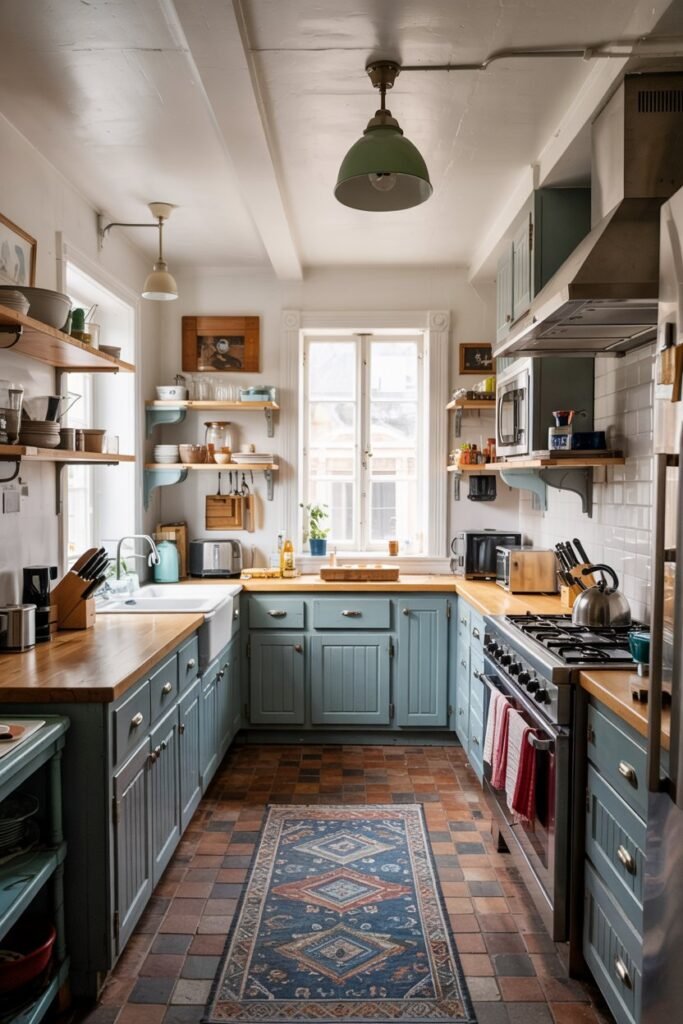
While traditional galley kitchens have two parallel walls, sometimes opening one side up can be a great solution if your home’s layout allows it.
This turns it into a single-wall kitchen that opens up to an adjacent living or dining area. This approach dramatically increases the sense of space and light. I’ve seen friends do this, and it creates a much more social and open environment.
You can add a small island or peninsula opposite the wall to regain some counter space and create a casual dining spot.
11. Use Uniform Flooring
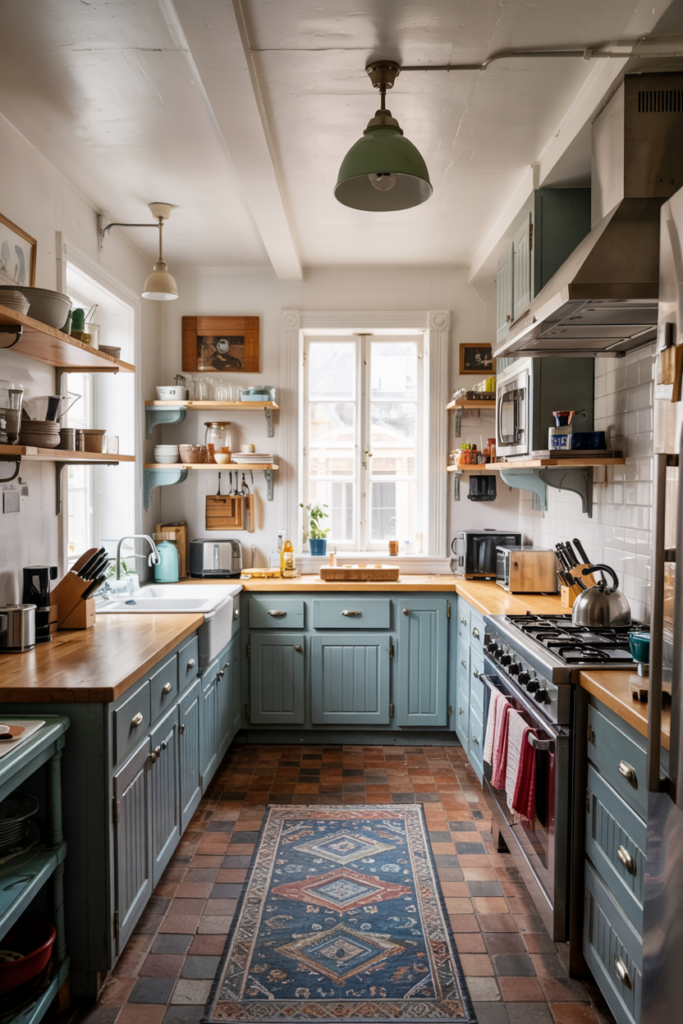
To make my galley kitchen feel more expansive, I used the same flooring that runs through the adjoining rooms.
This creates a seamless transition and makes the kitchen feel like a natural extension of the living space, rather than a separate, closed-off room. A continuous floor without thresholds or changes in material tricks the eye into seeing a larger area.
I chose a light-colored wood floor, which flows nicely from my hallway into the kitchen, visually expanding both spaces and tying the home together.
12. Add a Fold-Down Table
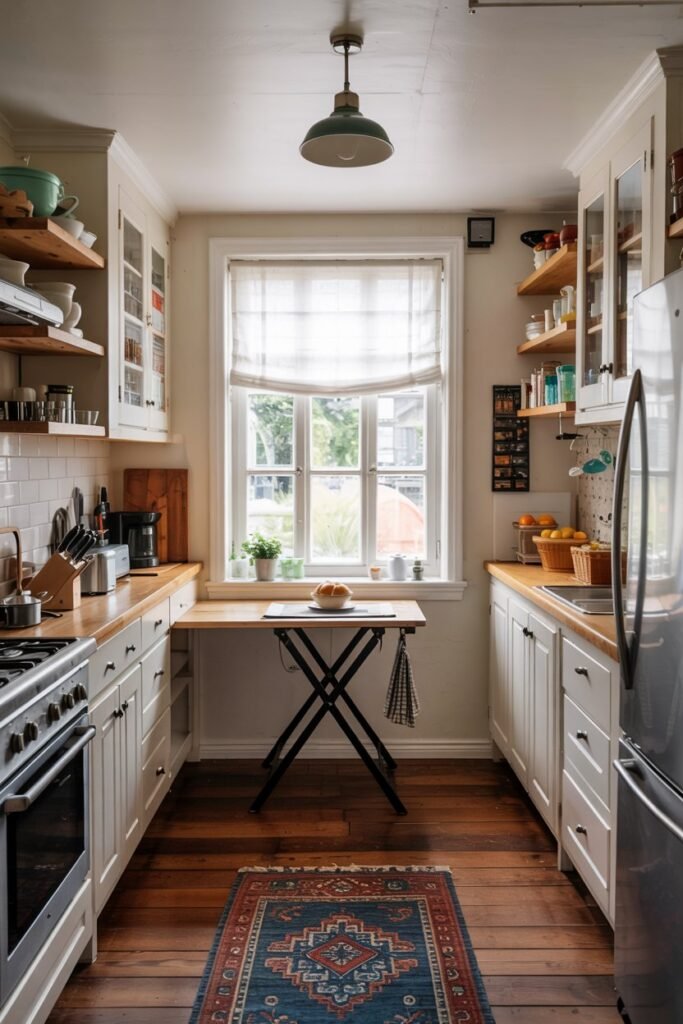
If you’re short on dining space, a fold-down table is an ingenious solution for a galley kitchen. I installed a small one on a section of empty wall space.
It provides a spot for a quick breakfast or a cup of coffee, and when it’s not in use, it folds away neatly, keeping the walkway clear.
This is a perfect example of multi-functional furniture that makes small spaces work harder. It gives you the convenience of a dining nook without the permanent footprint of a table and chairs.
13. Incorporate Glass Cabinet Doors
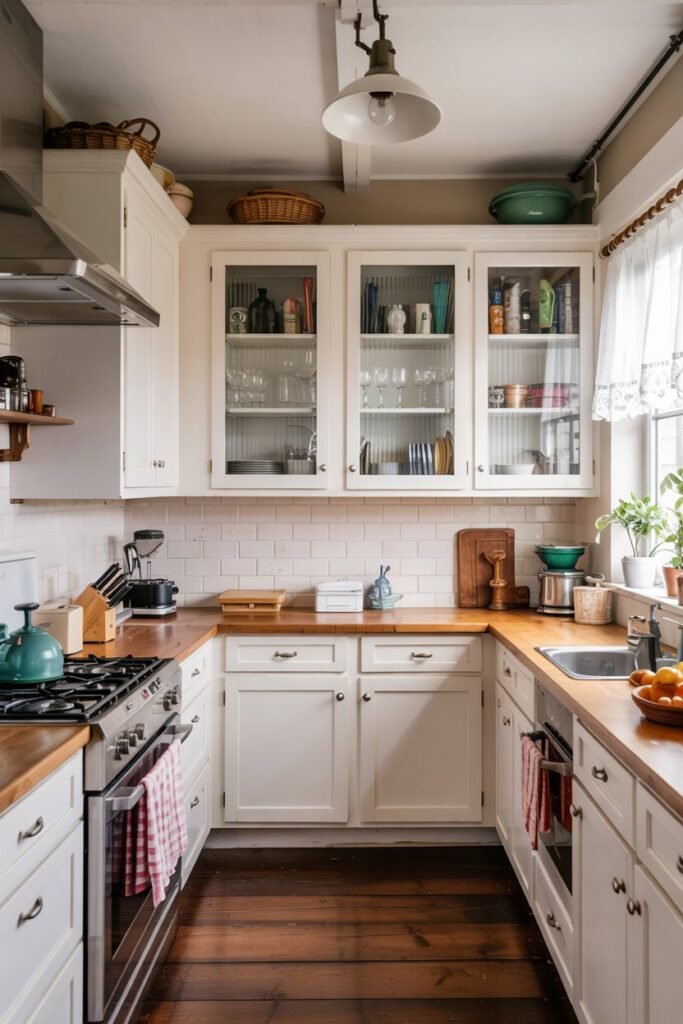
To break up the monotony of solid cabinet fronts, I replaced a few of them with glass doors. It was a great way to add visual interest.
Glass-front cabinets make the kitchen feel more open and allow you to display your prettiest glassware or dishes. I used reeded glass, which provides a bit of texture and obscures the contents just enough to hide any minor clutter.
It adds a touch of elegance and helps to lighten the visual weight of the upper cabinets, preventing that “walled-in” feeling common in galley kitchens.
14. Hang a Pot Rack
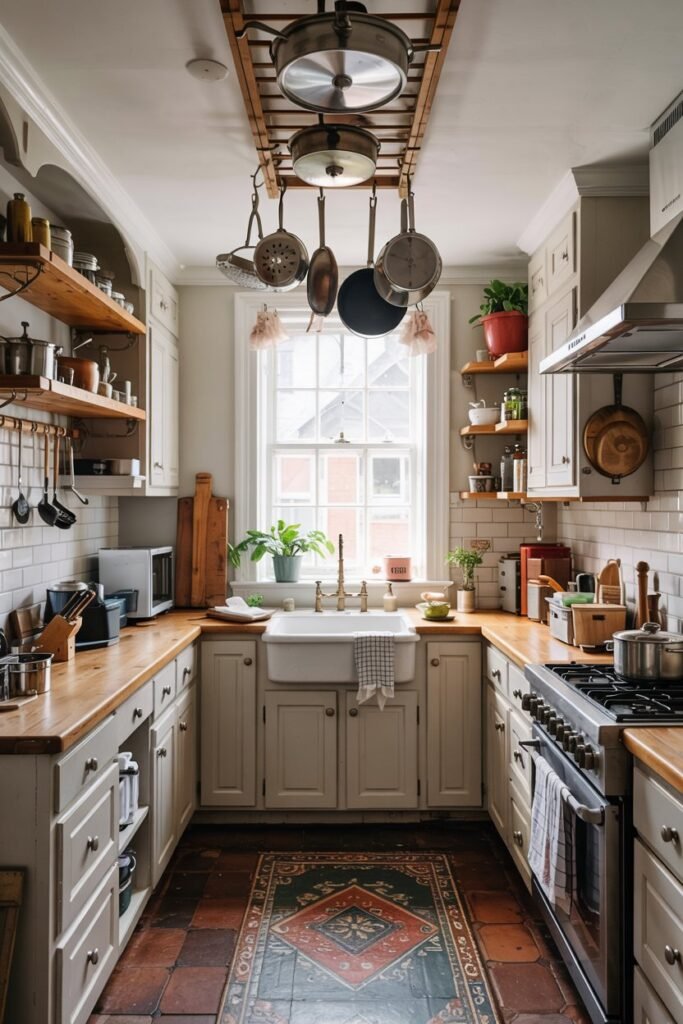
Counter and cabinet space is precious in a galley kitchen, so I decided to look up for more storage. A ceiling-mounted pot rack was the perfect solution.
It frees up a significant amount of cabinet space and keeps my most-used pots and pans within easy reach. It also adds a professional, chef’s-kitchen vibe that I love.
If a ceiling rack isn’t an option, a wall-mounted rack can work just as well. It’s a functional and stylish way to deal with bulky items that can otherwise be a storage nightmare.
15. Choose Compact Appliances
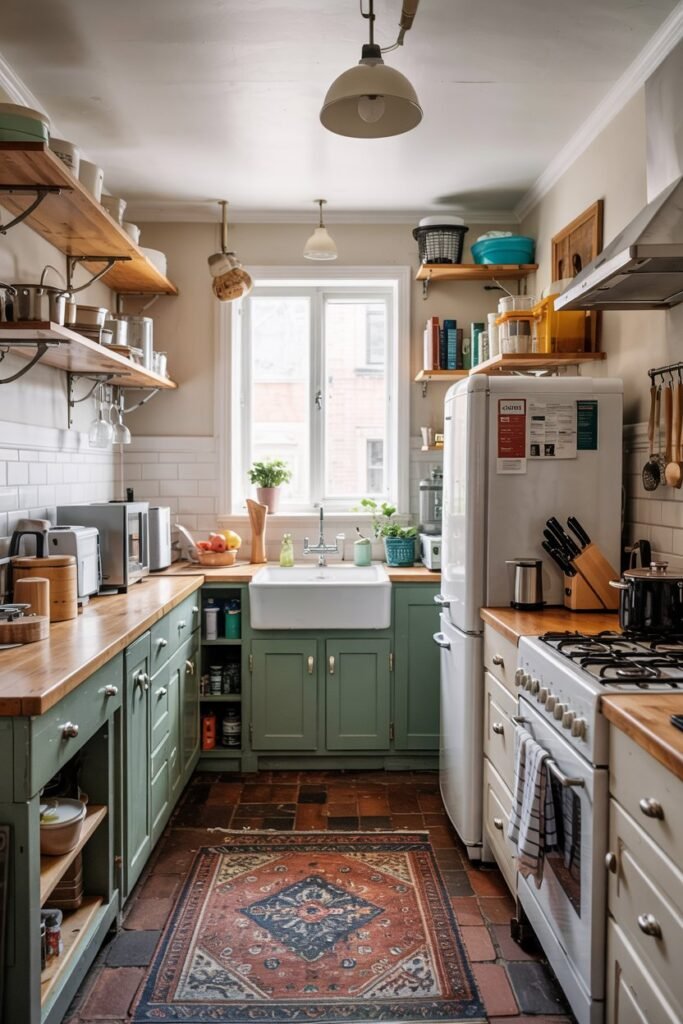
When I was selecting appliances, I specifically looked for models designed for smaller spaces. Many brands now offer slimline or compact versions of refrigerators, dishwashers, and stoves.
These appliances provide all the functionality you need without taking up valuable inches of counter or floor space. My 24-inch wide refrigerator fits perfectly and still has plenty of room for my groceries.
Choosing right-sized appliances is crucial for maintaining a comfortable workflow and preventing the kitchen from feeling overcrowded. It’s about being realistic about your space and needs.
16. Install a Butcher Block End
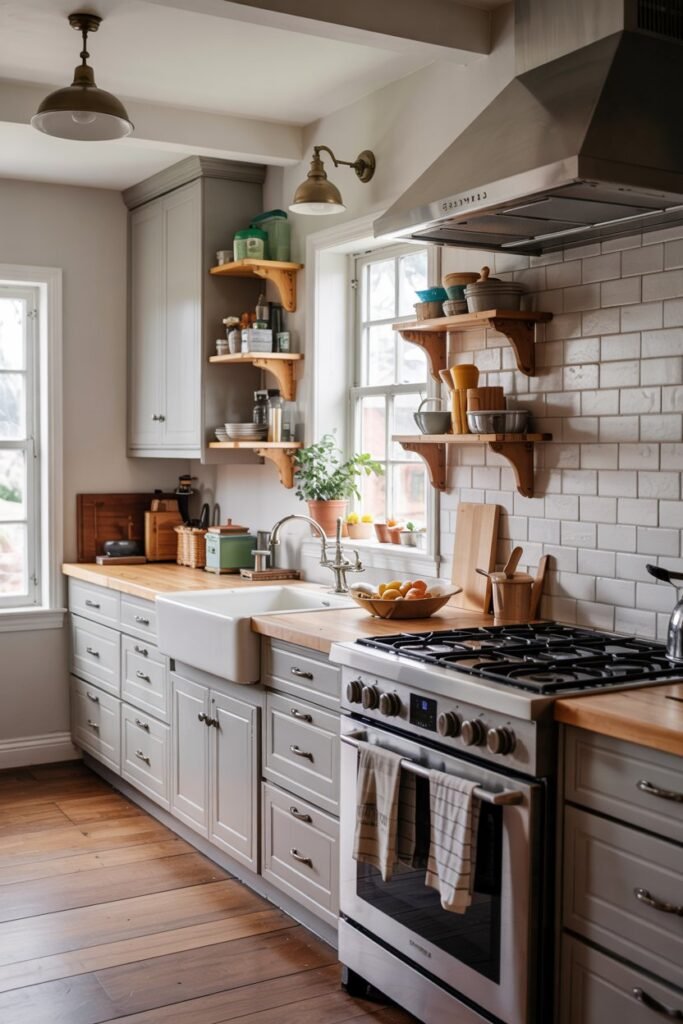
To add a bit of warmth and extra prep space, I extended the countertop at one end of my kitchen with a thick butcher block.
This little addition serves as a dedicated chopping station and brings a beautiful, natural element into the room. It breaks up the long line of the standard countertop material and adds character.
The wood’s warm tone contrasts nicely with my kitchen’s cooler color palette. It’s a functional detail that also feels like a custom, high-end touch, and I use it every single day.
17. Use Vertical Space for Plants
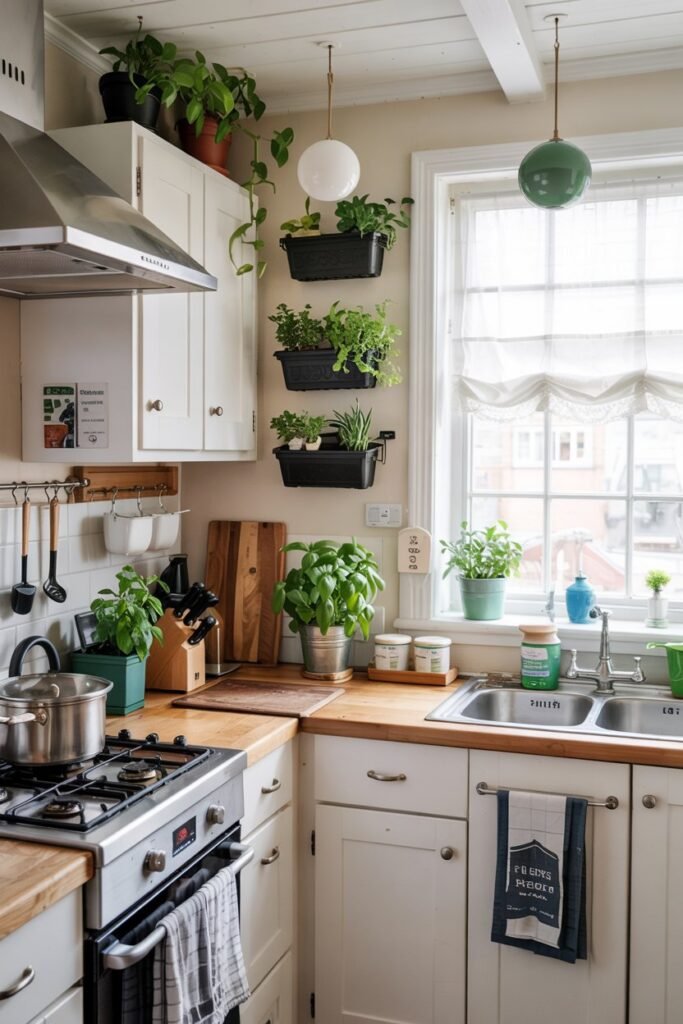
To bring some life and greenery into my kitchen without cluttering the counters, I used vertical space.
I installed a few small wall-mounted planters for fresh herbs. They’re right next to the window, so they get plenty of light, and I have fresh basil and mint right at my fingertips when I’m cooking.
You could also hang plants from the ceiling or place them on top of your cabinets. Plants purify the air and add a touch of color and organic texture that can soften the hard lines of a galley kitchen.
18. Create a Pass-Through
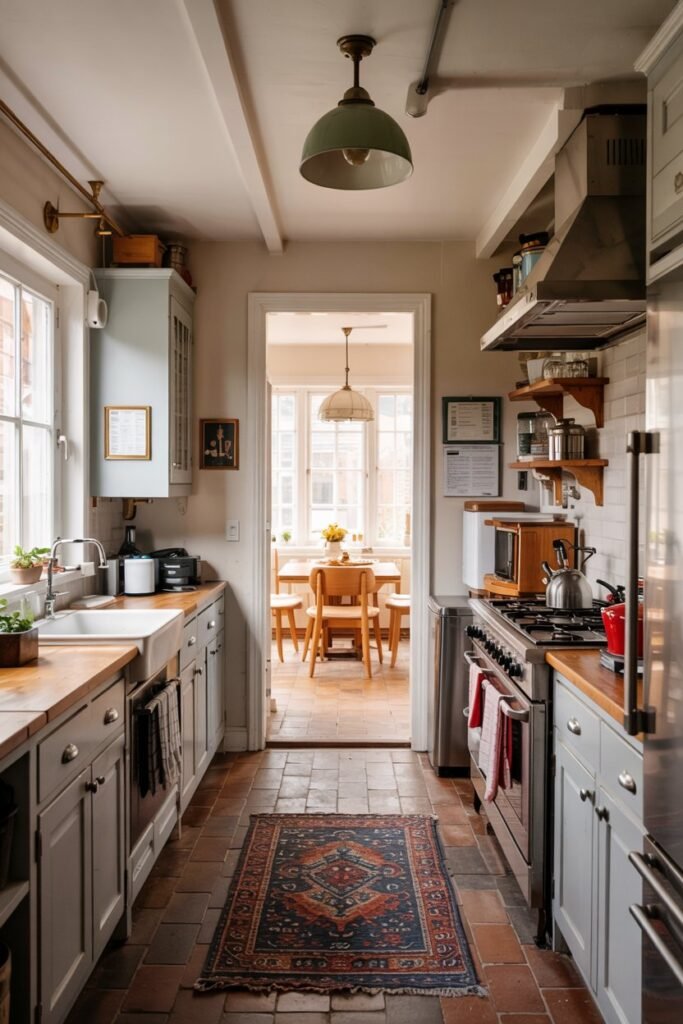
If your galley kitchen runs parallel to another room, like a dining or living room, creating a pass-through can be a transformative project.
By cutting an opening in the wall, you can create a connection between the two spaces. This makes the kitchen feel less isolated and allows light and conversation to flow freely.
I’ve seen this done with a breakfast bar on the other side, which creates a casual spot for people to sit and chat with the cook. It’s a renovation project, but it can completely change the dynamic of your home.
19. Go Handleless
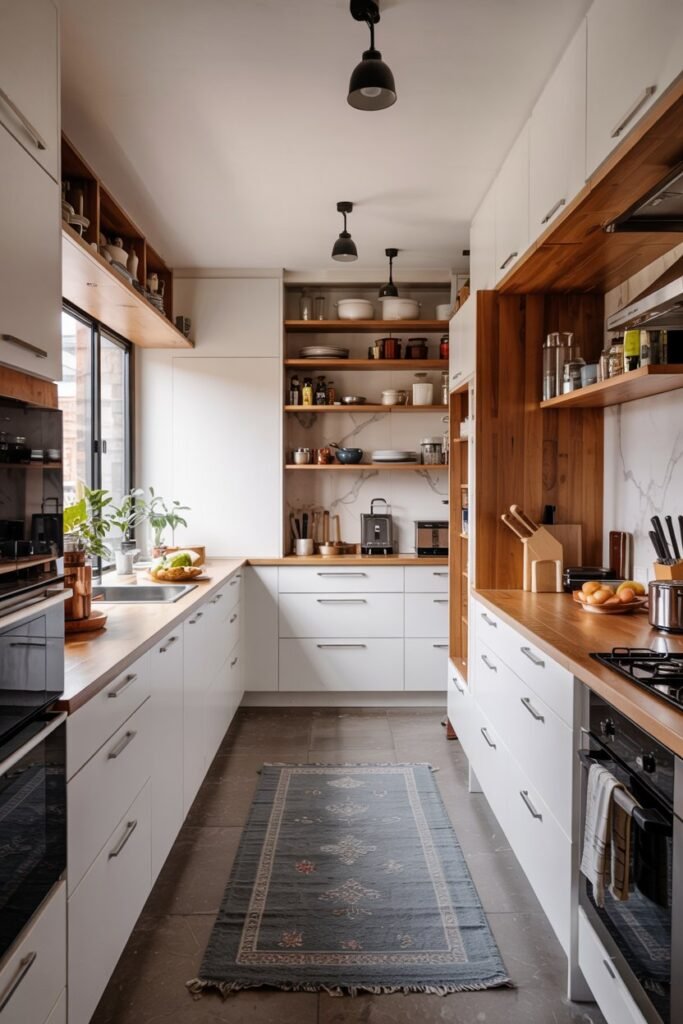
For the ultimate sleek and streamlined look, I seriously considered going with handleless cabinets.
This design uses integrated channels or push-to-open mechanisms, eliminating the need for any external hardware. In a tight galley kitchen, this means there’s nothing to snag your clothes on as you move around.
The uninterrupted, flat-fronted surfaces create a very clean, minimalist aesthetic that can make the space feel larger and more modern. It’s a sophisticated choice that emphasizes clean lines and simplicity, which is perfect for a narrow layout.
20. Add a Statement Light Fixture
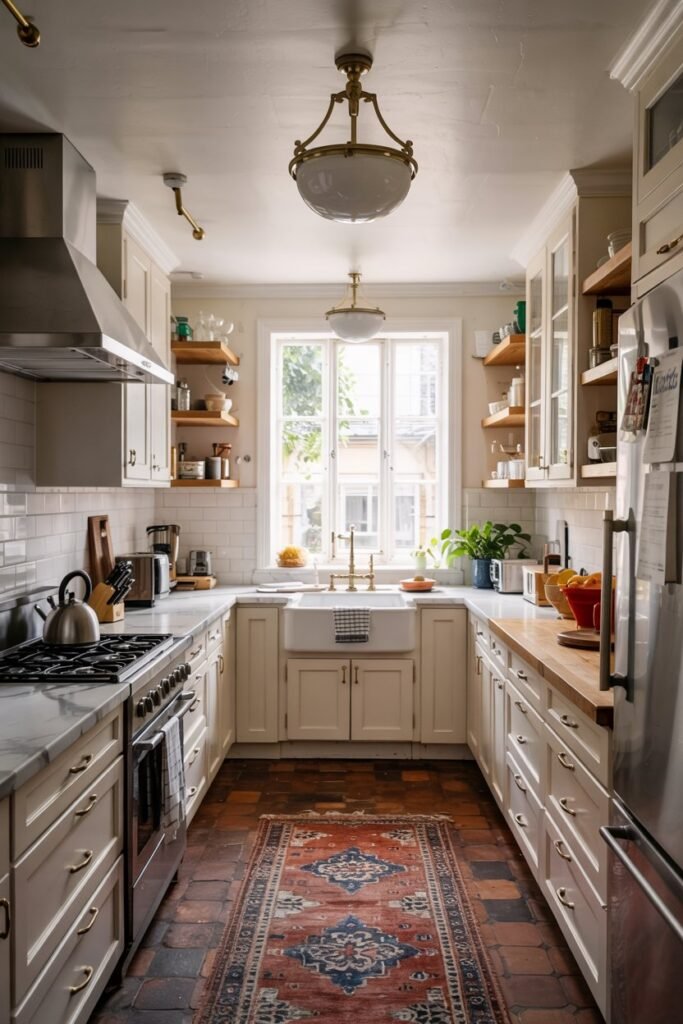
Just because a galley kitchen is a functional space doesn’t mean it can’t have a bit of glamour. I replaced the boring central light with a stylish statement fixture.
A beautiful pendant light or a modern semi-flush mount can act as a piece of jewelry for the room, drawing the eye upward and adding a dose of personality.
It elevates the entire design and makes the kitchen feel more thoughtfully curated. Make sure the fixture is scaled appropriately for the narrow space, but don’t be afraid to choose something with a unique design that you love.
Conclusion
Creating a beautiful and functional galley kitchen is all about smart planning and creative solutions.
If you need more personalized advice, consider talking to a professional kitchen designer.
They can help you make the most of your space and turn your vision into a reality.

I’m Jasmin Otto — a foody girl who truly loves food. I’m passionate about cooking, exploring new flavors, and sharing healthy yet delicious recipes here on foodieeshe.com. I also love beautiful kitchens and enjoy sharing décor ideas that make cooking spaces warm, stylish, and inspiring.